
Unclaimed money from account reconciliation issues occurs when banks, businesses, or financial institutions fail to properly account for deposits, withdrawals, or transfers—and these accounting gaps eventually lead to funds being turned over to state treasuries as abandoned property. When a discrepancy goes unresolved for months or years, and the account owner doesn’t actively use the account, dormancy rules kick in, and the financial institution is legally required to surrender the money. For example, a business might deposit a customer refund check that was never cashed or properly recorded in their accounting system; if that $500 sits unreconciled for three years with no other account activity, the bank must report it to the state as unclaimed funds.
With an estimated $58-$70 billion in unclaimed property sitting in state treasuries across the United States, account reconciliation issues are a surprisingly common source of these forgotten funds. Most people don’t realize that simple bookkeeping failures—like outstanding checks not properly tracked, deposits recorded twice, or errors in monthly reconciliation—can eventually transform into abandoned money that the state now holds in their name. Understanding how these issues create unclaimed funds is the first step to recovering money that might belong to you or your business.
Table of Contents
- How Reconciliation Discrepancies Turn Into Unclaimed Money
- Dormancy Triggers and the Three-Year Reporting Rule
- Common Reconciliation Issues That Become Abandoned Property
- Detecting and Recovering From Reconciliation-Related Unclaimed Money
- Unresolved Reconciliation Issues and the Risk of Permanent Loss
- Federal Unclaimed Money Systems and Quarterly Reviews
- Protecting Yourself and Future-Proofing Your Accounts
- Conclusion
How Reconciliation Discrepancies Turn Into Unclaimed Money
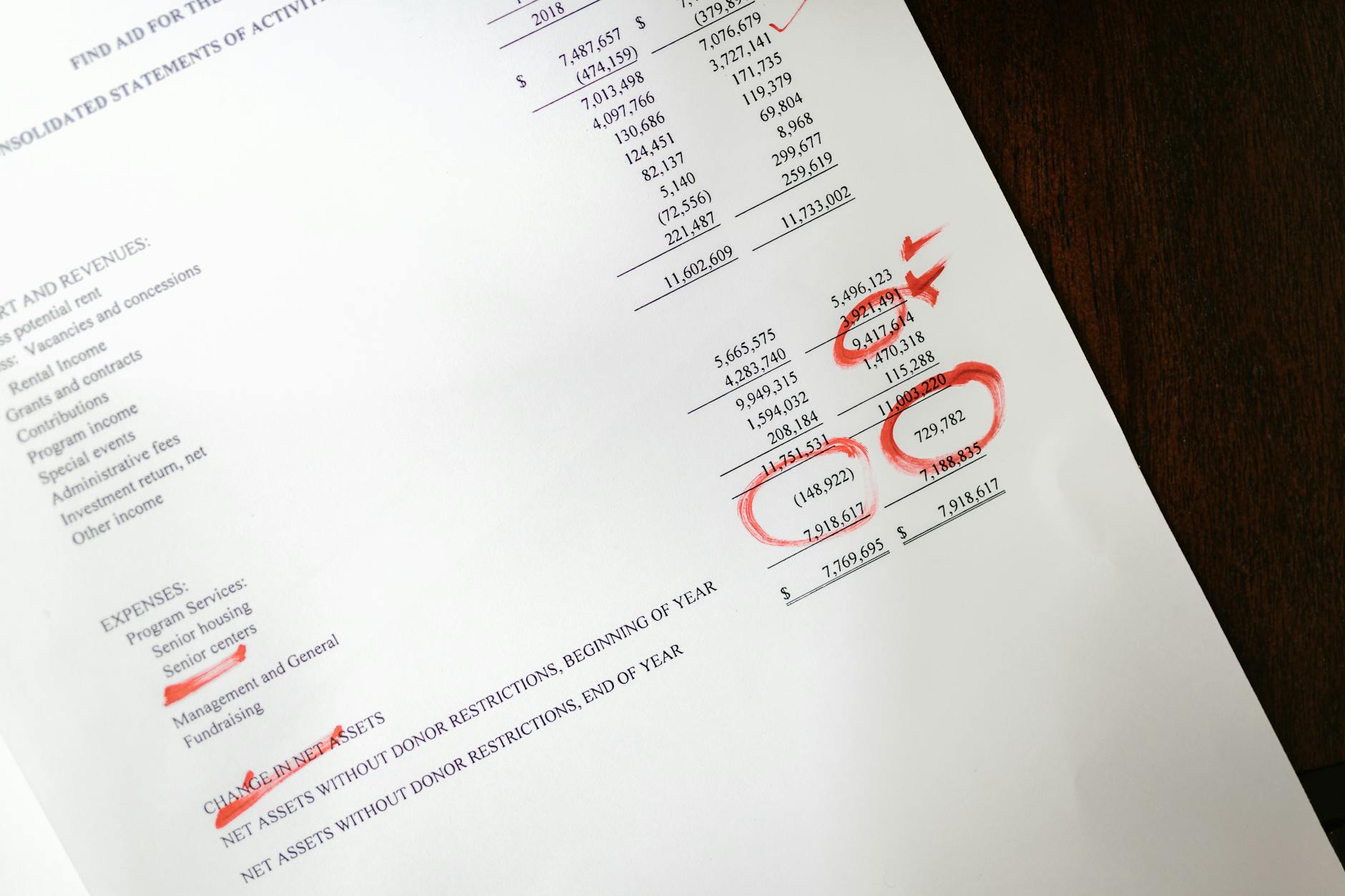
Account reconciliation is the process of comparing your bank statement with your internal records to ensure all transactions match. When this reconciliation isn’t done regularly or thoroughly, discrepancies pile up. The most common issues include outstanding checks that are never cashed but remain on the books, deposits in transit that get recorded twice, bank fees that weren’t anticipated, and transfers that were initiated but never received. These timing differences and accounting errors seem minor at first, but if an account goes unreconciled for months or years, no one catches the problem until it’s too late. Once an account remains inactive—meaning no customer-initiated deposits or withdrawals—for 3 to 5 years (the specific period varies by state and asset type), dormancy rules automatically trigger. At that point, financial institutions are legally required to attempt to contact the account owner. If contact cannot be made within three years, the law mandates that banks must turn the funds over to the state treasury.
This is where reconciliation failures become particularly dangerous: if there’s an unresolved discrepancy in your account and you’re not actively monitoring it because you’ve moved on to other banks, you may never know that unclaimed funds exist in your name until years have passed. Consider this real-world scenario: A small business received a customer refund of $1,200 and recorded it as a deposit, but the accountant never cleared the corresponding bank charge when the deposit failed to post. For two years, the business never reconciles that account because cash flow has been good elsewhere. When the accountant finally notices, the unresolved $1,200 sits dormant. Three years pass. The bank tries to reach the business owner but sends the notice to an outdated address. The state now holds that $1,200 as unclaimed property, and the business has no record of why or where it went.
Dormancy Triggers and the Three-Year Reporting Rule
State dormancy laws exist to protect consumers and businesses by ensuring that forgotten funds eventually reach a custodian—the state—rather than remaining trapped in financial institution coffers. An account is considered dormant when there has been no customer-initiated activity (deposits, withdrawals, or transfers) for a set period, typically three to five years depending on the state and the type of account. Once dormancy is triggered, the institution must make a reasonable effort to contact the owner. This might include sending a letter to the last known address, attempting a phone call, or sending an email if available. However, here’s the critical limitation: banks are not required to conduct an exhaustive search. They send one notice to the last address on file and consider their obligation satisfied if the owner doesn’t respond. This is where unclaimed money from reconciliation issues becomes invisible.
If your address changed, if the letter went to spam, or if you simply didn’t recognize the notice because the account seemed closed, you’ll miss the opportunity to reclaim your funds before they’re turned over to the state. Federal agencies face a similar requirement: they must review their uninvested trust and deposit accounts every quarter and report any unclaimed money amounts. After posting amounts quarterly, agencies have 30 days to confirm accuracy, and if no notification is received within 60 days, the amounts are assumed correct and must be surrendered to the state. The three-year reporting window is not a grace period—it’s a deadline. Businesses must report to the state any property that has been unclaimed for the dormancy period specified by that state’s laws. A reconciliation error discovered at year two is already in danger; one discovered at year four is already with the state. This is why frequent reconciliation—ideally monthly, or even more often for higher-volume accounts—is essential to catching discrepancies before they become unclaimed property.
Common Reconciliation Issues That Become Abandoned Property
Outstanding checks are the most frequent culprit in reconciliation-related unclaimed money. An outstanding check is one you’ve written and recorded in your books, but the recipient hasn’t yet cashed it. If you write a check for $300 and months pass without it being deposited, your internal balance shows $300 less than your bank balance. When you don’t reconcile regularly, you might forget this check even exists. If the account then goes inactive for several years, the bank reports the $300 as unclaimed property—even though you wrote a check for it. The money is technically “yours,” but it’s now considered abandoned because the account holder (you) never resolved the discrepancy. Deposits in transit create a similar problem. If you record a deposit on December 31st but the bank doesn’t post it until January 2nd, you’ll show a different balance than the bank for those few days. In most cases, the deposit clears quickly and the reconciliation resolves itself.
But if you never reconcile, if the deposit was rejected for some reason, or if there was a clerical error about the amount, the discrepancy persists. One company deposited a $5,000 customer payment on the last day of the fiscal year, recorded it immediately, and then forgot to follow up when it never appeared on the bank statement. By the time someone noticed three years later, the dormancy period had passed, and the state was holding $5,000 in unclaimed funds in the company’s name—funds that the company had already accounted for as revenue. Bank fees, reversals, and automatic transfers also frequently cause reconciliation failures. A fee might be charged that you weren’t expecting, or a third-party transfer might be initiated without your knowledge (a payment plan or subscription, for instance). If these aren’t properly recorded in your books or if the corresponding entry is deleted when the transaction is reversed, the account remains out of balance. Many people don’t reconcile at all; they simply assume the bank is correct and move on. This passive approach to reconciliation is extremely risky, especially when combined with changing addresses or closing accounts without verifying that all transactions were properly cleared. What seems like a minor $50 discrepancy today could be $50 in abandoned property tomorrow.

Detecting and Recovering From Reconciliation-Related Unclaimed Money
If you suspect that reconciliation issues have caused unclaimed money in your name, the first step is to search state unclaimed property databases. Every state maintains a searchable database of unclaimed funds held in the state treasury, often accessible through the state comptroller’s office or a dedicated unclaimed property website. You can search by your name or by your business name. If you find funds, the process to claim them is usually straightforward: you submit a claim form, provide proof of ownership, and wait for the state to verify and release the funds. The process typically takes 30 to 60 days, though complex claims may take longer. However, there’s an important caveat: if you don’t reconcile your accounts regularly, you may not even know that unclaimed money exists until you search the database on a whim. This is why businesses should reconcile monthly at minimum, or even more frequently if they have high transaction volumes.
Monthly reconciliation creates multiple checkpoints where reconciliation errors can be caught and corrected before accounts go dormant. A business that reconciles annually—or worse, never—is essentially gambling that no discrepancies exist. The moment an unresolved discrepancy sits for three years, it becomes the state’s property, and recovery becomes dependent on your ability to find it and prove ownership. The advantage of regular reconciliation is that it also provides a paper trail. If you reconcile monthly and document each month’s process, you’ll have evidence of what should be in the account. If a discrepancy later appears, you can reference your reconciliation records to prove that you discovered it, attempted to resolve it, and can now claim the funds. Without this documentation, claiming unclaimed property becomes much harder, especially if years have passed.
Unresolved Reconciliation Issues and the Risk of Permanent Loss
One of the most dangerous aspects of reconciliation-related unclaimed money is that it can be genuinely difficult to recover if you haven’t kept records. Imagine you closed a business account five years ago, assuming everything was resolved. Today, you search your state’s unclaimed property database and find $2,000 in unclaimed funds under your old business name. You might remember the account, but can you prove you owned it? Do you have statements from five years ago? Can you explain what the discrepancy was? If the state requires proof of ownership and you can’t provide it, your claim may be denied. This is especially true for older claims, where bank records may have been destroyed and institutional memory has faded. Another warning: statute of limitations on unclaimed property claims vary by state.
Some states allow claims indefinitely, while others impose time limits—typically ranging from five to seven years after the funds are turned over to the state. If you wait too long to search for and claim your money, you might discover that you’re no longer legally able to recover it. Additionally, if reconciliation issues affected a business account and that business is now defunct, proving ownership becomes even more complicated. You’ll need to provide evidence that you were the authorized representative of the business at the time the funds were turned over to the state. The bottom line is that unresolved reconciliation issues create a cascading problem: first, you don’t notice the discrepancy because you’re not reconciling; second, the account goes dormant and you don’t respond to the notice; third, the state takes the money; fourth, you eventually discover the money but can’t easily prove it’s yours; fifth, the statute of limitations may have already passed. The best protection is regular reconciliation—monthly at minimum for any account of consequence—combined with keeping records and monitoring your accounts for any unusual activity.

Federal Unclaimed Money Systems and Quarterly Reviews
Federal agencies operate under slightly different unclaimed money rules than private banks and state treasuries. Federal agencies must analyze their uninvested trust, revolving, and deposit fund accounts every quarter to determine if any unclaimed money should be refunded to depositors. After the U.S. Treasury Fiscal Service posts unclaimed money amounts quarterly, agencies have 30 days to report on the accuracy of those amounts. If no notification is received within 60 days, the posted amounts are assumed correct by the Treasury.
This quarterly review system is meant to catch federal-level reconciliation issues and ensure that unclaimed funds are identified and returned to their rightful owners. However, the federal system also creates opportunities for errors, particularly if an agency’s internal accounting system doesn’t match the Treasury’s records. A federal employee who is owed a retirement refund, a tax overpayment, or unclaimed benefits might not realize that their money is sitting in a federal unclaimed funds account if they don’t actively search for it or if the agency never properly notified them. Like state unclaimed property, federal unclaimed money can be claimed by contacting the relevant agency or searching federal unclaimed property databases. The key difference is that federal systems are sometimes faster—claims resolved within 30 to 60 days are common—because federal agencies have more direct access to records and can more easily verify ownership.
Protecting Yourself and Future-Proofing Your Accounts
The path forward is clear: establish a monthly or quarterly reconciliation schedule, maintain detailed records, and keep your contact information current with every financial institution you use. If you’re a business, assign this responsibility to a specific person or team, and build it into your accounting workflow. If you’re an individual managing multiple accounts, set a calendar reminder each month to review your statements and verify that all transactions match your records. This proactive approach eliminates the vast majority of reconciliation-related unclaimed money problems before they start. Looking ahead, digital banking and automated accounting software have made reconciliation easier and faster than ever.
Many bank accounts now sync directly with accounting software, automatically flagging discrepancies and outstanding items. If you’re still using manual reconciliation methods—paper statements and a spreadsheet—consider upgrading to a system that flags reconciliation issues automatically. The cost is minimal compared to the risk of losing thousands of dollars to unclaimed property claims. Additionally, as states continue to crack down on unclaimed property compliance and increase the visibility of unclaimed funds databases, more people are discovering money they didn’t know they had. This is good news if you search proactively, but bad news if you ignore reconciliation and hope for the best.
Conclusion
Unclaimed money from account reconciliation issues is a largely preventable problem that stems from poor accounting practices and inattention to detail. When accounts are not reconciled regularly, discrepancies go unnoticed, accounts drift into dormancy, and financial institutions are forced by law to turn funds over to state treasuries. With $58-$70 billion in unclaimed property held across all states, and bank accounts being the most common type of unclaimed asset, the risk is real and widespread.
The good news is that you can reclaim funds that have been turned over to the state by searching your state’s unclaimed property database and submitting a claim. To protect yourself and your business, reconcile your accounts monthly, maintain clear records, and stay alert to any discrepancies. If you’ve already discovered unclaimed money under your name, begin the claim process immediately—state databases make it easy to search and file claims online. The few hours you invest in reconciliation and claim recovery now can save you from losing thousands of dollars in the future.